29/12/2025
A data protection and transparency perspective
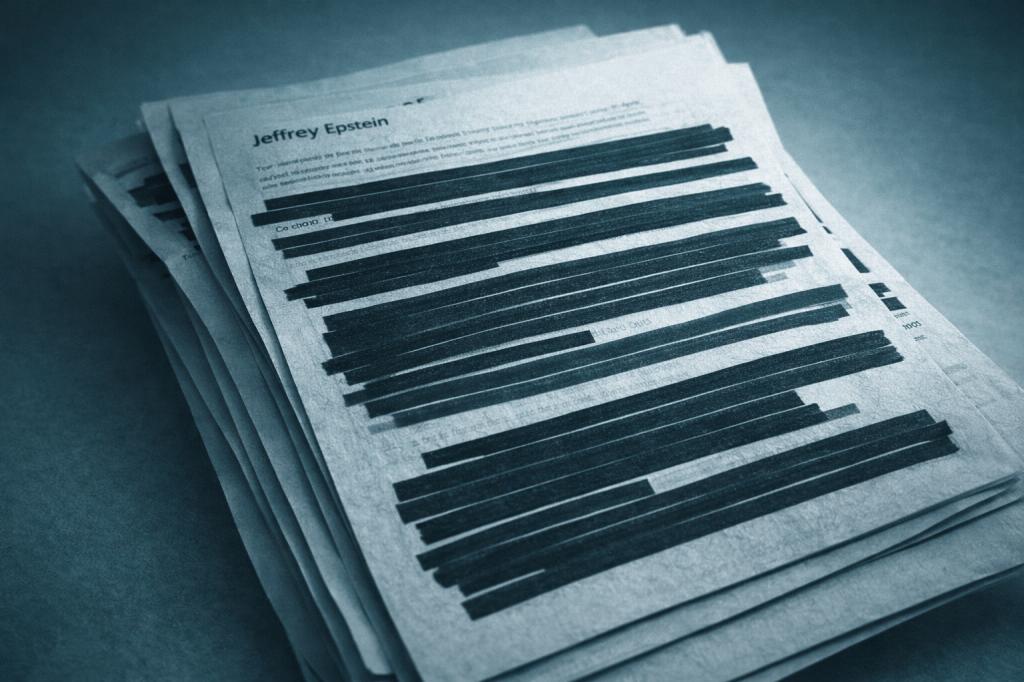
When high-profile court documents are released to the public, there is often an expectation that they will reveal everything. So when the US Department of Justice (DoJ) released nearly 30,000 more pages of documents related to the late convicted sex offender Jeffrey Epstein, many people expected full transparency. Instead, they saw pages of black bars. That frustration is understandable, but from a data protection perspective, extensive redaction is exactly what you would expect.
These documents relate to court proceedings connected to Jeffrey Epstein. Court records are not designed as transparency tools. When material is made public, courts must balance open justice against privacy rights, fairness, and legal protections owed to third parties.
Why so much is redacted?
Heavy redaction is usually required because the documents contain:
- personal data of third parties who were never charged or convicted;
- victims’ and witnesses’ information, which attracts heightened protection;
- unproven allegations that were never tested in court; and
- material linked to ongoing or related legal matters.
Releasing this information wholesale would risk serious harm, unfairness, and legal challenge. Under both US and UK data protection principles, disclosure must be lawful, fair, and proportionate – even where there may be strong public interest.
This mirrors the UK approach
Anyone familiar with UK GDPR, SARs, or FOI will recognise this balancing exercise. High public interest does not automatically override privacy rights. It is weighed carefully against the rights of individuals, particularly where allegations are involved in addition to many other potential exemptions under the UK’s DPA 2018.
In many cases, not redacting could be the real failure.
Why international data sharing is part of this story
This issue isn’t just about US courts. The moment documents are disclosed, published online, shared with overseas lawyers, journalists, or authorities, personal data starts to move across borders. At that point, it becomes an international data transfer.
International transfers matter because once personal data leaves its original legal system, control is significantly reduced. Different countries offer different levels of privacy protection, legal remedies and oversight. Without safeguards, sensitive information could be reused, republished or relied on in ways that cause serious and irreversible harm.
This is why mechanisms such as the UK–US Data Bridge exist, and why organisations are still expected to carry out transfer risk assessments. Even where a transfer is technically permitted, decision-makers must consider whether the disclosure is necessary, proportionate, and adequately protected in practice.
Redaction plays a key role in this process. By removing personal data that does not need to travel internationally, such as unproven allegations or information about third parties, courts reduce transfer risk and help ensure that cross-border disclosures remain lawful and fair.
The bottom line
Redacted documents are unsatisfying, but they are usually a sign that privacy, fairness and legal safeguards are being taken seriously. Data protection law is not about hiding wrongdoing; it is about preventing disproportionate harm while the justice system does its work.
The Epstein files sit right at that uncomfortable intersection between transparency and privacy – and the black bars show that balance being applied, not avoided. Let’s just hope someone audited them before they were released of course…
 JH Data Protection Limited
Leave a comment