12/07/2026
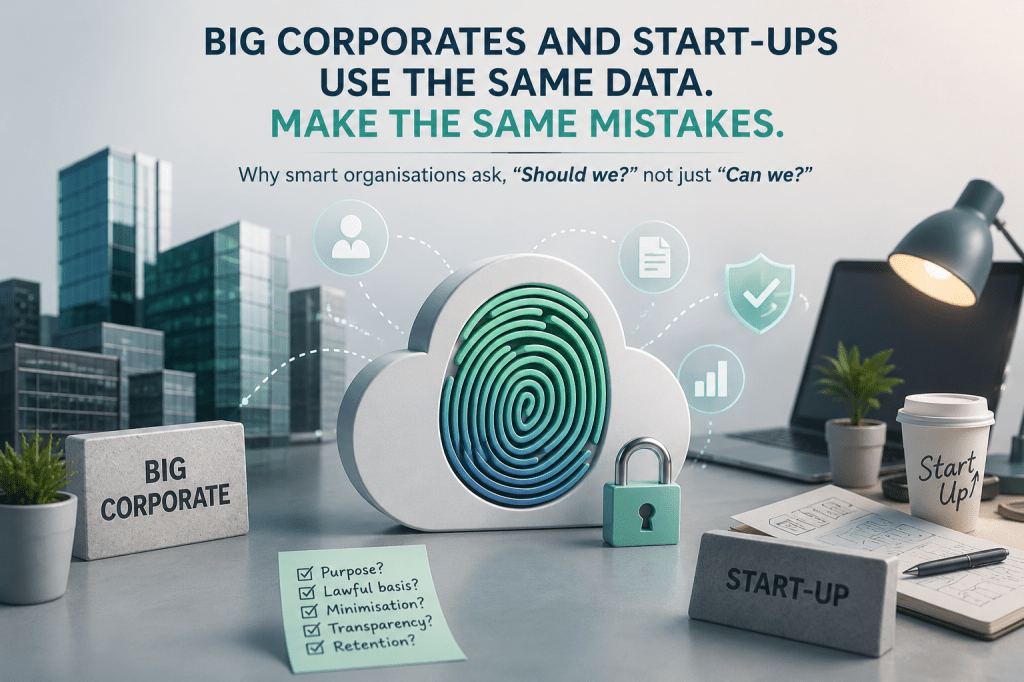
The biggest data protection risk? It’s certainty.
The organisations most likely to get into difficulty with data protection are rarely the ones asking difficult questions.
They’re the ones convinced they’re already compliant.
Whether it’s a multinational or a start-up, the mistakes are remarkably similar:
Collecting data because they can, not because they need to. Data has become a commodity, and “just in case” is still one of the biggest GDPR failures.
Treating consent as a cure-all. Consent is only one lawful basis and, in many contexts, it’s the wrong one. Worse still, invalid consent gives a false sense of security.
Seeing compliance as paperwork. A privacy notice, a DPIA or a Record of Processing Activities is not compliance. They’re evidence of thinking. If the thinking isn’t there, the paperwork won’t save you.
Building products before asking legal or privacy questions. Privacy by design is not a slogan. Retrofitting compliance is invariably slower, more expensive and often impossible.
Assuming security equals privacy. You can have world-class cyber security and still process personal data unlawfully. Encryption cannot fix an unlawful purpose.
Forgetting that trust is an asset. Customers rarely see your internal governance. They judge you by how you treat their information when things go wrong.
The most mature organisations I’ve worked with don’t ask, “Can we use this data?”
They ask, “Should we?”
That single change in mindset is often the difference between organisations that merely comply with the law and those that earn lasting trust.


Leave a Reply